yufei chen
info
contact
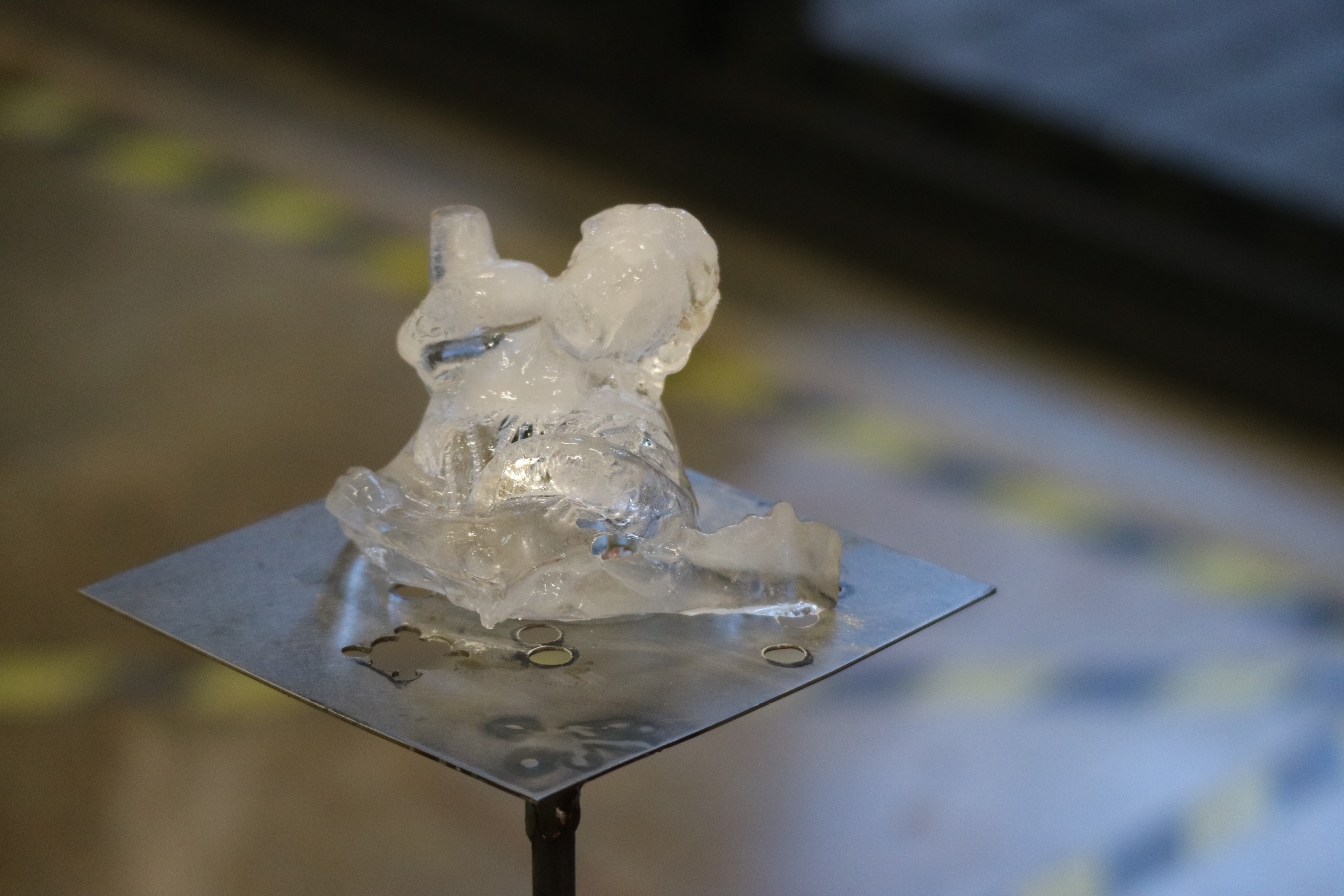
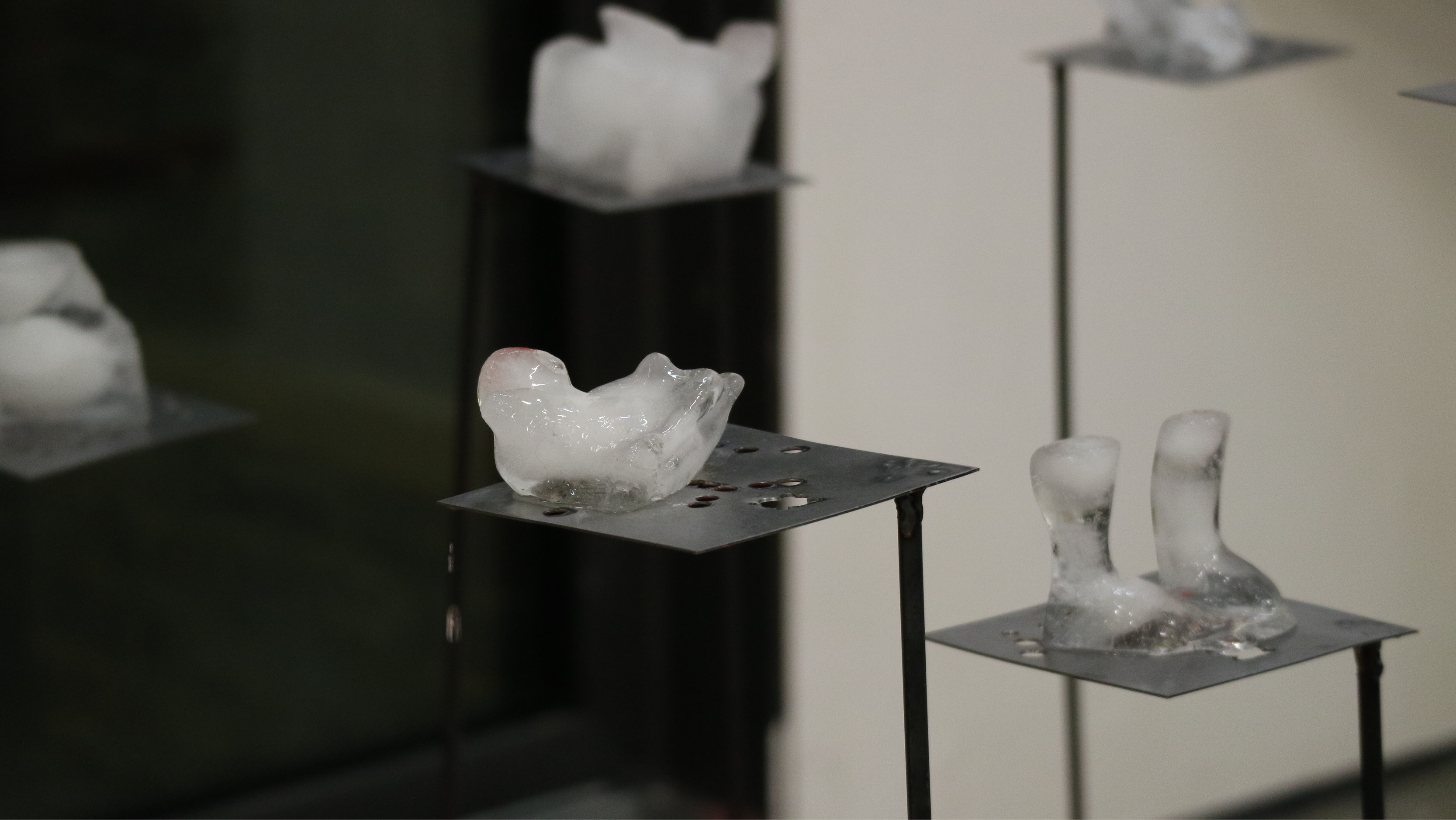
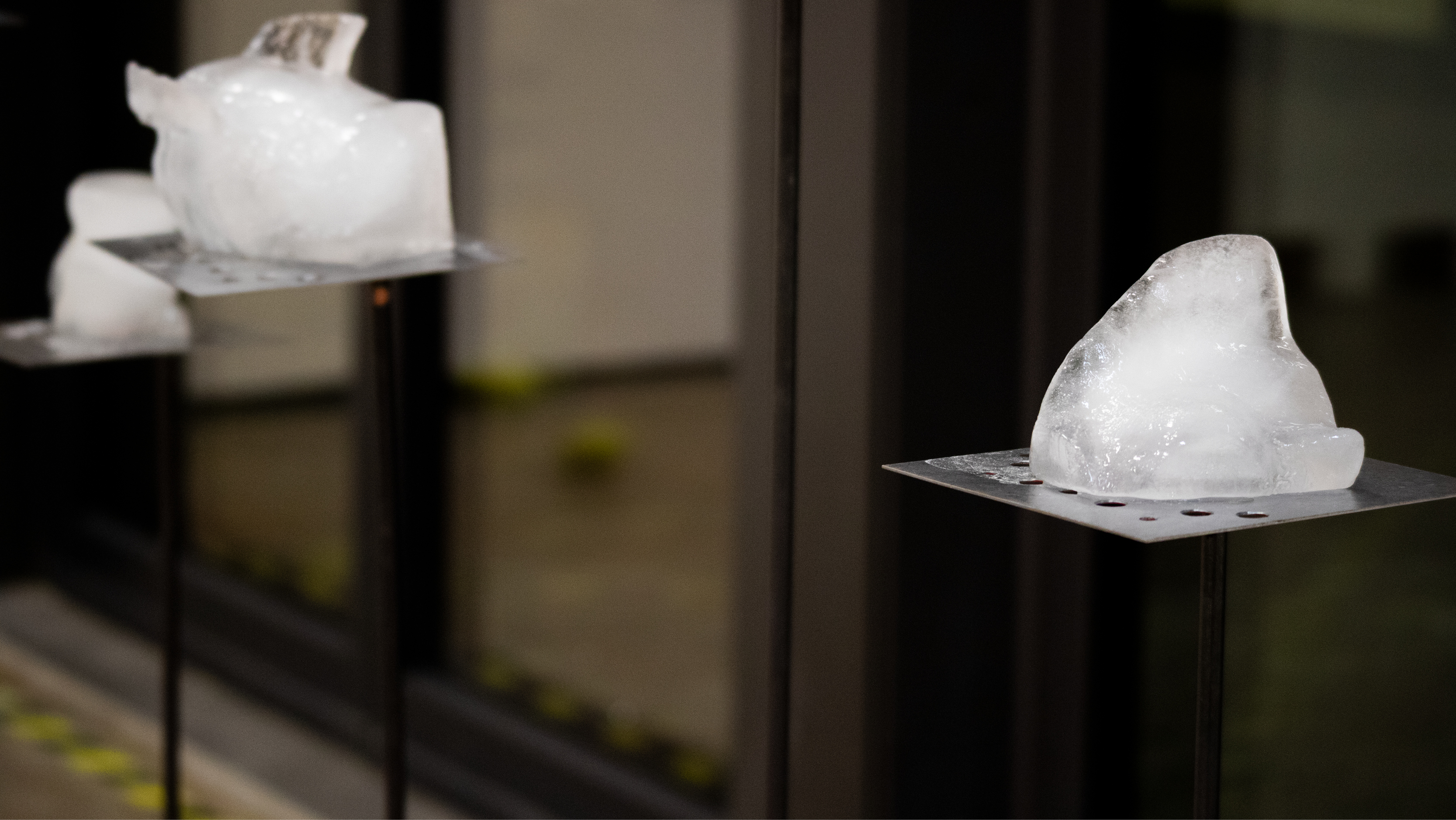
Double click the video to watch in full HD.
Ephemeral Withstood
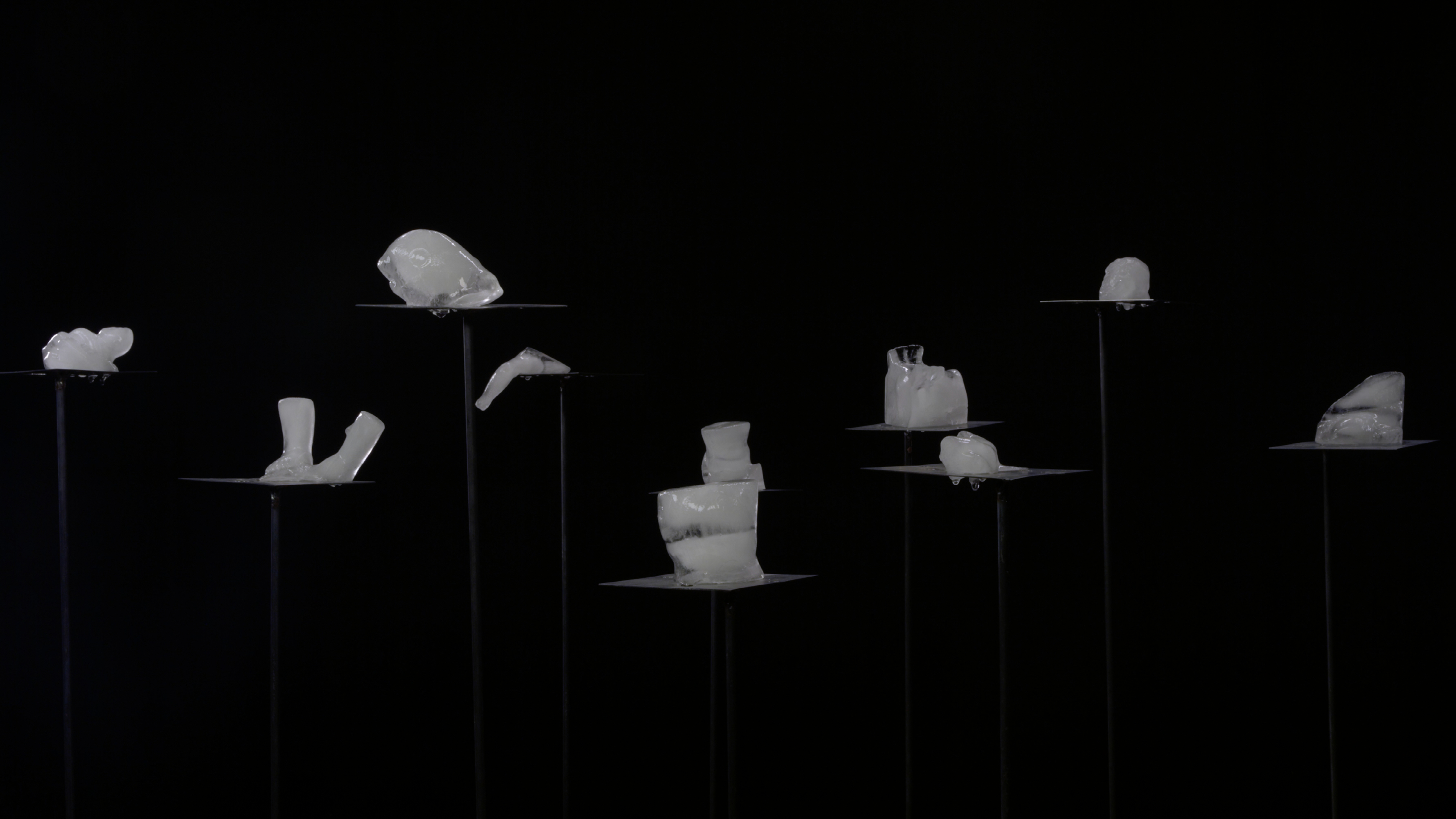
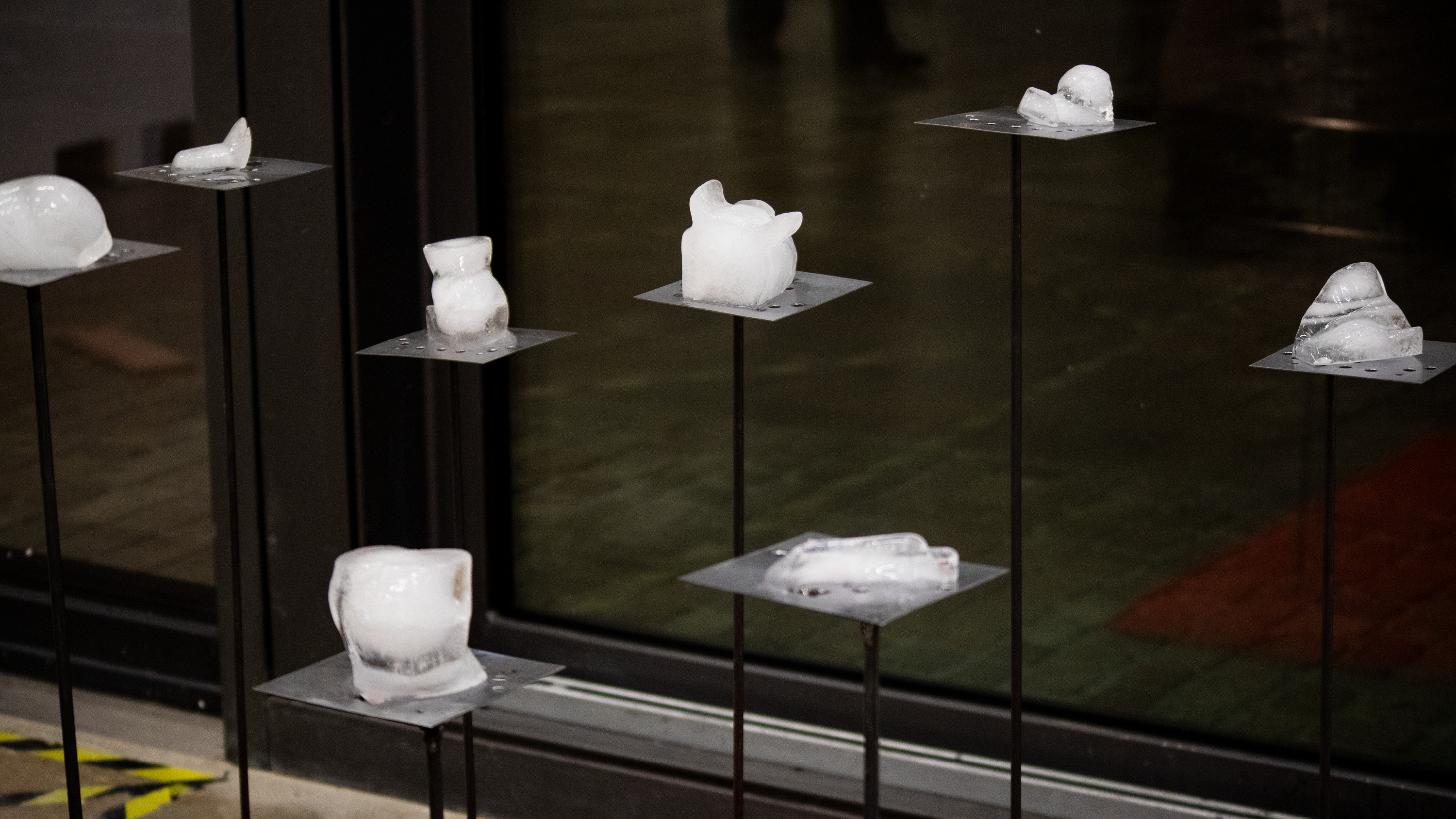
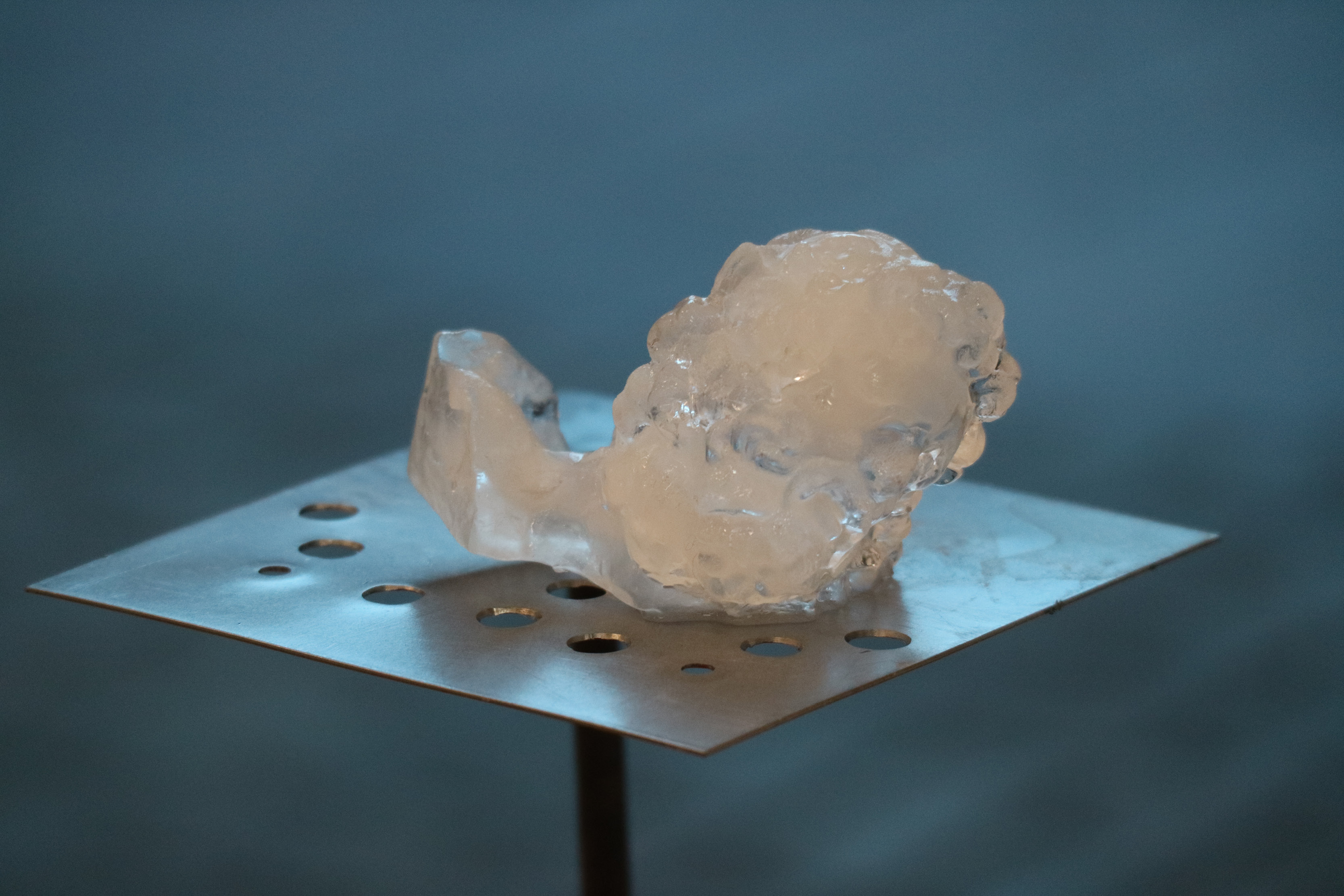
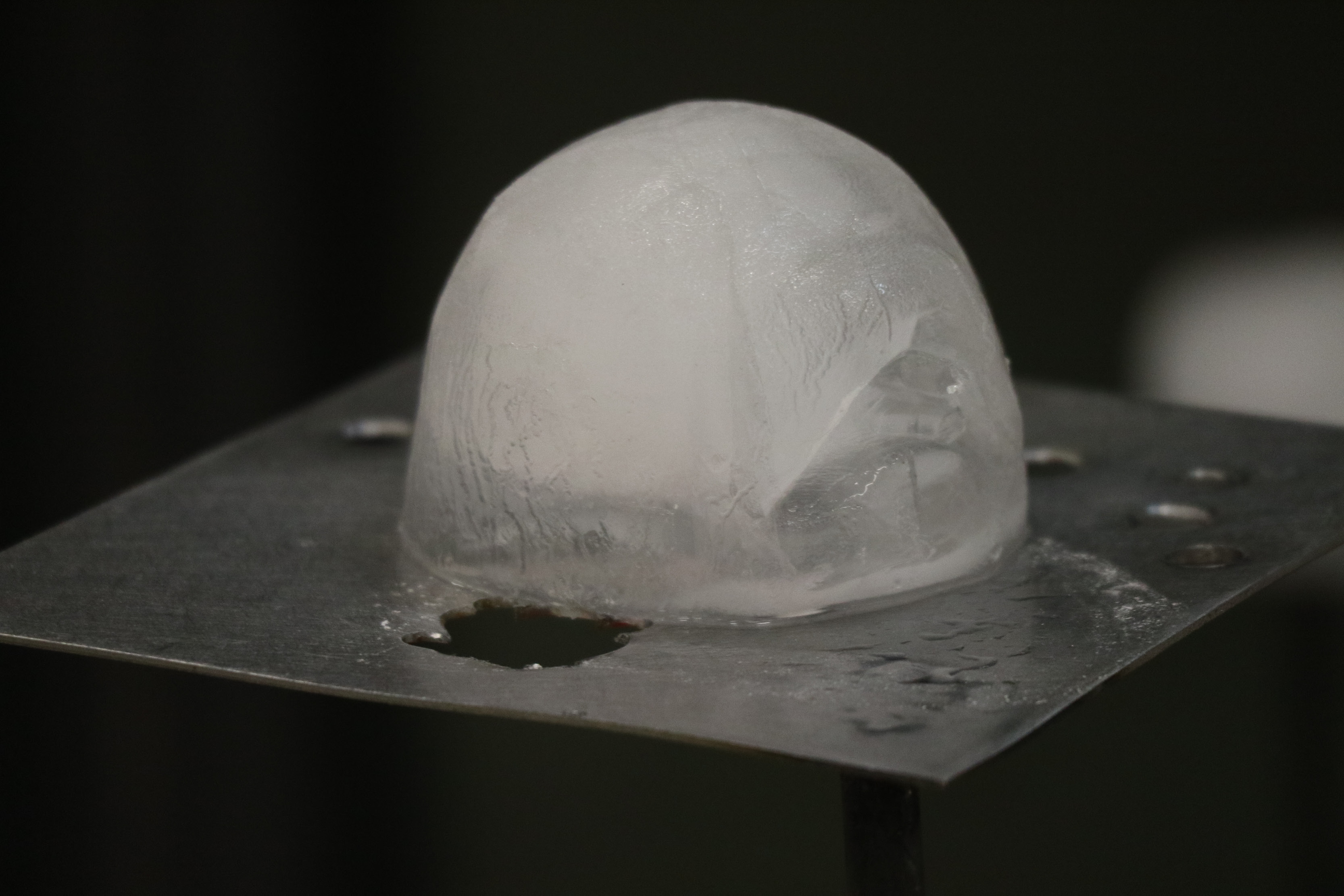
2025, 10 metal stands, red carpet, display screen, 10 ice sculptures of various sizes made by water from The British Museum, The British Library, and Central Saint Martins
2025, 10 metal stands, red carpet, display screen, 10 ice sculptures of various sizes made by water from The British Museum, The British Library, and Central Saint Martins
Ephemeral Withstood presents a group of temporary sculptures made with ice. These sculptures originated from two figures that are related to colonial struggles, both historically and mythologically.
One is the statue of King Béhanzin (c.1845–1906). He was the last independent ruler of the Kingdom of Dahomey, in present-day Republic of Benin. The statue presents him with the figure of a half-man, half-shark. This image was given to him by his people and symbolises his protection of the Dahomey seacoast and his strong resistance against French colonisers around the 1890s. He was exiled to Martinique after being defeated by the French in the Second Franco-Dahomean War (1892–1894). The statue of him was looted by the French army during the war and stored in the French museum Musée du Quai Branly, and was only recently returned to the Republic of Benin.
The other figure takes reference from the famous Roman statue Laocoön and His Sons. According to the myth, they were put to death by the gods with sea serpents for trying to stop the Greek invasion of Troy. These two statues to me echo each other. They both attempt to resist an invading authority, and are punished with death or exile because of it.
There were around 7,000 artefacts plundered by the French in 1892 from Dahomey, and only 26 of them (including the statue of King Béhanzin) have recently been returned. The past tragedy has not yet been repaired, while new debates questioning France’s motivation behind restituting these artefacts have also emerged. As I cannot reinstate historical absence, I therefore use materials, fragments of representations of artefacts, and the melting of ice to challenge the construction of history, creating ‘ghosts’ of those silenced artefacts back into public view. However, I refuse to produce them in a way that fits with Western museum ideology, where imperial power often needs objects to stand there permanently, immortalised and forever silent.
However briefly, the melting of ice for me presents a form of resistance, refusing to be captured, materialised as cultural fragments, or used for cultural abuse.
One is the statue of King Béhanzin (c.1845–1906). He was the last independent ruler of the Kingdom of Dahomey, in present-day Republic of Benin. The statue presents him with the figure of a half-man, half-shark. This image was given to him by his people and symbolises his protection of the Dahomey seacoast and his strong resistance against French colonisers around the 1890s. He was exiled to Martinique after being defeated by the French in the Second Franco-Dahomean War (1892–1894). The statue of him was looted by the French army during the war and stored in the French museum Musée du Quai Branly, and was only recently returned to the Republic of Benin.
The other figure takes reference from the famous Roman statue Laocoön and His Sons. According to the myth, they were put to death by the gods with sea serpents for trying to stop the Greek invasion of Troy. These two statues to me echo each other. They both attempt to resist an invading authority, and are punished with death or exile because of it.
There were around 7,000 artefacts plundered by the French in 1892 from Dahomey, and only 26 of them (including the statue of King Béhanzin) have recently been returned. The past tragedy has not yet been repaired, while new debates questioning France’s motivation behind restituting these artefacts have also emerged. As I cannot reinstate historical absence, I therefore use materials, fragments of representations of artefacts, and the melting of ice to challenge the construction of history, creating ‘ghosts’ of those silenced artefacts back into public view. However, I refuse to produce them in a way that fits with Western museum ideology, where imperial power often needs objects to stand there permanently, immortalised and forever silent.
However briefly, the melting of ice for me presents a form of resistance, refusing to be captured, materialised as cultural fragments, or used for cultural abuse.
Exhibition video
2026
Painting series: I shut my eyes through light and darkness
2025
Anthropocene
Ephemeral Withstood
The Residual Flame
When you see me, when will you see me?
2024
Spectacle of Bubbles
This is My Street
2023
An Excavation on the “British” Land
Painting series: I shut my eyes through light and darkness
2025
Anthropocene
Ephemeral Withstood
The Residual Flame
When you see me, when will you see me?
2024
Spectacle of Bubbles
This is My Street
2023
An Excavation on the “British” Land